How to Forecast China’s NEV Market Share for 2030
Hello there! If you’ve been following the automotive world, you already know China is the undisputed heavyweight champion of electric vehicles. But exactly how dominant will new energy vehicles (NEVs)—battery electrics, plug‑in hybrids, and fuel‑cell cars—become by 2030? Will every second car sold be electric? More? Let’s unpack this together, step by friendly step. By the end, you’ll have a simple yet robust framework to make your own educated guess, backed by the latest trends and expert insights.
Step 1: Start with Today’s Numbers
First, let’s ground ourselves in reality. In 2023, China sold just over 9.5 million NEVs, accounting for 31.6% of total new car sales. Fast forward to mid‑2024, and monthly NEV penetration has already flirted with 50% in some months. That’s a steep climb from just 5.4% in 2020. The base is strong: China is adding millions of NEV sales every year, and the momentum shows no sign of slowing. If you project this growth linearly—which we’ll refine later—you might quickly land at 60‑70% by 2030. But a good forecast digs deeper.
Step 2: Decode Government Policies and Targets
Beijing’s policy machine is the North Star for EV adoption. Here’s what to watch:
- Dual‑credit policy—It forces automakers to produce more NEVs or buy credits, effectively setting a floor under market share.
- New Energy Vehicle Industry Development Plan (2021‑2035)—This official roadmap targets NEVs to become 40% of new car sales by 2030. But official targets are often conservative; actual consumer uptake has consistently beaten them.
- Emission peak by 2030 and carbon neutrality by 2060—These national goals put heavy pressure on the transport sector to electrify faster.
- City‑level restrictions—License plate auctions and driving bans on internal combustion engine (ICE) cars in mega‑cities like Beijing, Shanghai, and Guangzhou push buyers toward green plates.
When you add up these signals, it’s clear the policy environment will only get tougher for ICE vehicles. Many analysts believe the 40% target is a floor, not a ceiling. A reasonable adjustment puts the policy‑driven impetus at around 50‑55%—a key input for your forecast.
Step 3: Evaluate Charging Infrastructure Growth
You can’t sell EVs without chargers. The good news? China is building them at a staggering pace. By the end of 2023, there were over 8.5 million public and private charging points. The government aims for a 1:1 vehicle‑to‑charger ratio in major urban areas by 2030. With battery swapping also expanding for fleets, range anxiety is fading fast. More chargers mean higher consumer confidence, which directly lifts the adoption ceiling. If infrastructure keeps pace, it could support an NEV share well above 70%.
Step 4: Tap into Consumer Sentiment and Urbanization
Chinese buyers are famously pragmatic. When NEVs became cheaper to own and operate than gasoline cars—thanks to lower fueling and maintenance costs—the tide turned. Today, NEVs are no longer just for early adopters; they’re aspirational, especially the smart, connected models from BYD, NIO, and Xiaomi. Plus, as urbanization continues, younger, tech‑savvy city dwellers see NEVs as the default choice. Surveys show that over 60% of potential car buyers now consider an electric model first. This cultural shift is a powerful accelerator that policy alone can’t create—but it multiplies the effect of everything else.
Step 5: Check Technology and Cost Curves
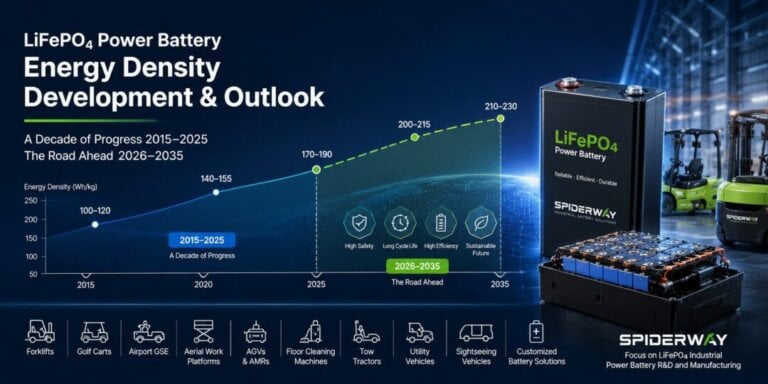
Battery costs have cratered over the past decade—lithium‑iron‑phosphate (LFP) cells now cost under $60 per kWh in China. With continuous improvements in energy density and the rollout of sodium‑ion batteries, EVs are on track to reach purchase price parity with ICE cars across all segments by 2025‑2026. After that, they’ll simply be the cheaper option. Solid‑state batteries, expected post‑2027, could eliminate range concerns altogether. Manufacturing capacity is also massive: China’s battery factories alone can supply over 1,500 GWh annually by 2025—enough for 30 million cars. This oversupply will keep prices low and competition fierce, making NEVs irresistible for cost‑conscious buyers.
Step 6: Factor in Automaker Competition and Production Shifts
Almost every major Chinese automaker—and many legacy global players—has pledged to stop developing new ICE models by 2025 or soon after. BYD, the market leader, already sells only NEVs. In 2023, over 90% of its 3 million sales were pure battery or plug‑in hybrid. Traditional players like SAIC, Changan, and GAC are converting their line‑ups at breakneck speed. This supply‑side transformation means that by 2028, finding a brand‑new ICE car in China might be as hard as finding a flip phone today. When the market offers almost nothing else, the NEV share naturally soars.
Step 7: Synthesize and Make Your Own Projection
Now, pull it all together. Let’s assign rough weightings to each driver on a 0‑100% scale, then blend them:
- Historical growth curve suggests ~70% by 2030
- Policy pressure points to 55‑65%
- Infrastructure readiness supports 75%+
- Consumer and tech trends push toward 80%
- Automaker strategy effectively mandates an 85%+ NEV mix
Blend these with a dash of pragmatism (used‑ICE sales will still exist, and plug‑in hybrids count as NEVs), and a consensus‑like prediction emerges: 70% to 80% of new car sales in China will be NEVs by 2030. Some optimistic forecasters at research houses like BloombergNEF or the China EV100 think tank even suggest 85‑90%. Personally, I’d pencil in 75% as a solid baseline, with the clear understanding that it could be higher if solid‑state batteries arrive early or oil prices spike.
Of course, watch out for wildcards—economic slowdowns, raw material supply crunches, or a sudden policy reversal. But given China’s track record, the direction is unmistakably and irreversibly electric.
So, grab your own spreadsheet and play with the numbers. The beauty of this step‑by‑step method is that you can update it every quarter as new data rolls in. You’re now equipped to forecast China’s NEV future like a pro—no advanced degree required. Happy predicting, and see you in 2030 to see how close we got!
Supplier & Author Profile

- SpiderwayVerified
SPIDERWAY is a trusted LiFePO4 battery manufacturer specializing in golf cart, marine, RV, solar energy storage, industrial, and custom lithium battery solutions. We deliver OEM/ODM services, factory-direct quality, global shipping, and expert support for distributors, brands, and wholesale buyers worldwide.
Latest entries
- 2026-09-17Liquid-Cooled LiFePO4 Battery Packs for Heavy-Duty Electric Machinery
- 2026-09-16598.92V 180.87kWh High-Voltage Lithium Battery System for Heavy-Duty Electric Machinery
- 2026-09-08Exploring SPIDERWAY’s LiFePO4 Battery Plant in Hefei: A Look Inside an Advanced Industrial Lithium Battery Production Line
- 2026-09-08Evolution of LiFePO4 Battery Energy Density: A Decade of Advances and Future Outlook (2015–2035)