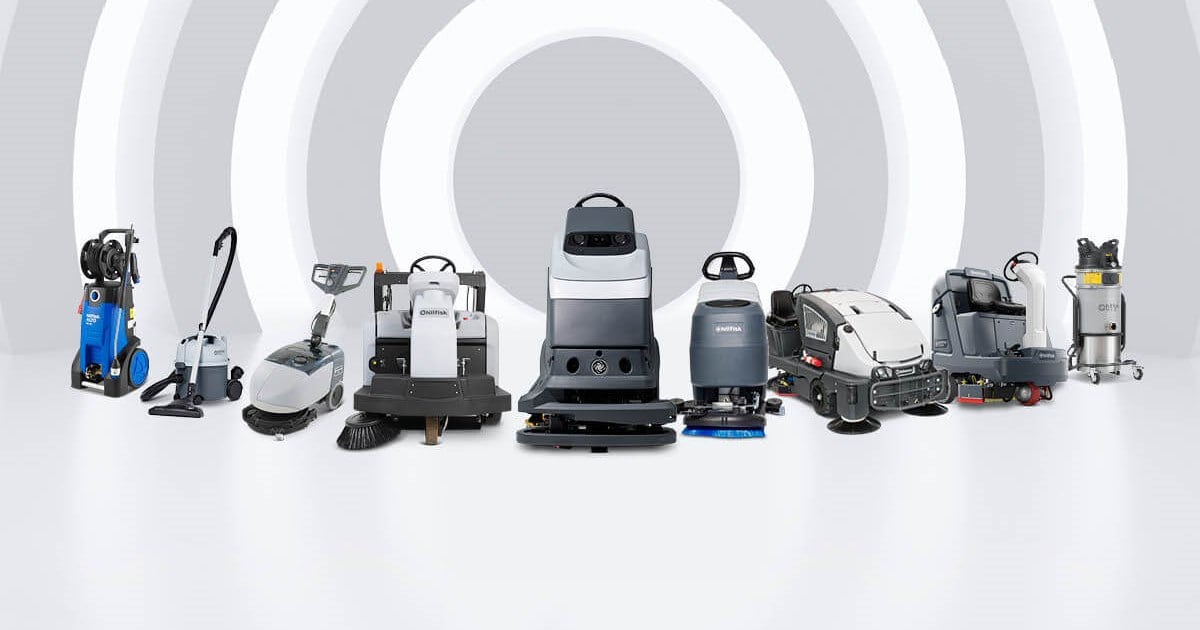
LiFePO₄ Batteries for Commercial Floor Scrubbers: OEM & ODM Engineering Guide
Why Lithium Power Is Reshaping Commercial Floor Cleaning
From warehouses and shopping centers to airports, hospitals, factories, supermarkets, and hotels, commercial floor scrubbers are essential to maintaining clean, safe, and presentable facilities. Equipment uptime, cleaning productivity, and operating costs directly affect facility management efficiency, and the battery is at the heart of that equation.
As a lithium battery engineering specialist at SPIDERWAY, we’ve observed a decisive shift in the commercial cleaning equipment industry: conventional lead-acid batteries are giving way to lithium-ion technology, with LiFePO₄ (LFP) emerging as one of the most compelling choices for demanding floor scrubber applications.
But a floor scrubber battery is not just an energy-storage component. It must function as an integrated power system—matched to the machine’s voltage, current draw, battery compartment, charger, BMS, communication protocols, duty cycle, and operating environment. SPIDERWAY provides OEM and ODM manufacturing solutions for both new-machine manufacturers and aftermarket battery replacement or lithium-upgrade projects.
Six Compelling Advantages of LiFePO₄ for Floor Scrubbers
Commercial floor scrubbers often run for several hours per shift in demanding environments. Battery performance directly influences cleaning output, so the choice of chemistry matters. LiFePO₄ offers distinct benefits over flooded lead-acid, AGM, and gel batteries.
1. Extended Cycle Life
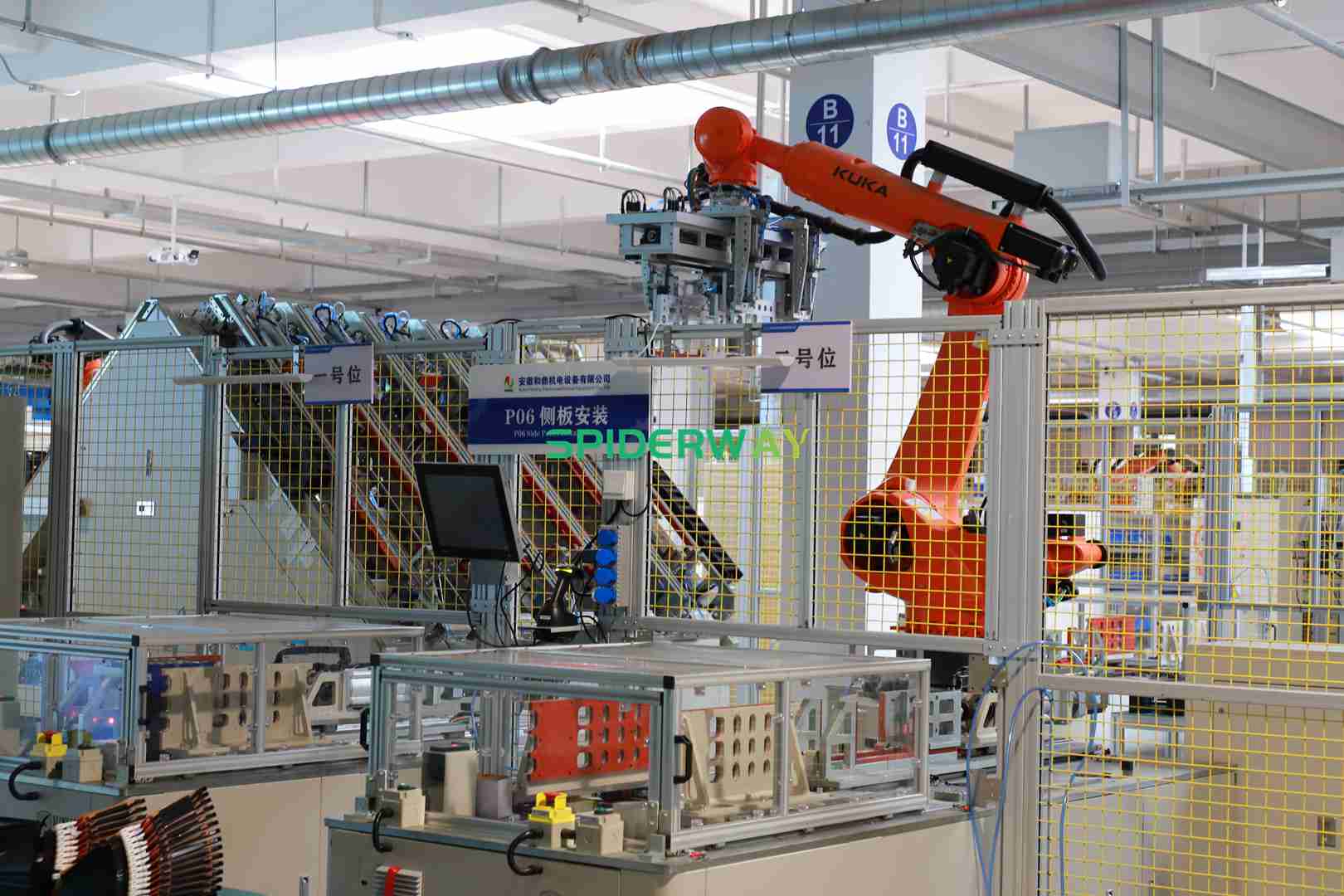
LiFePO₄ batteries can deliver thousands of charge-discharge cycles when designed with appropriate cell selection, operating conditions, depth of discharge (DoD), charging strategy, thermal management, and BMS configuration. For cleaning fleets, this translates into fewer battery replacements, which reduces procurement costs, labor, maintenance requirements, downtime, waste-disposal needs, and overall total cost of ownership. Facilities that run scrubbers daily see the most significant economic gains.
2. Higher Usable Capacity
Lead-acid batteries require conservative DoD limits to protect their service life, meaning a significant portion of rated capacity is never used. LiFePO₄ batteries, when properly engineered and controlled by the BMS, can supply a much larger share of rated capacity as usable energy. Additionally, LFP delivers a more consistent voltage plateau, helping brush motors, vacuum motors, traction drives, and pumps perform uniformly throughout the shift—critical for ride-on machines where productivity depends on stable motor performance.
3. Faster Charging and Opportunity Charging
Traditional lead-acid batteries need long charge times plus absorption and cooling periods, often dictating a single-shift schedule with overnight charging. LiFePO₄ systems can support faster charging and opportunity charging—recharging during breaks or machine downtime—depending on battery design, charger compatibility, BMS, and machine architecture. This flexibility benefits multi-shift operations in warehouses, airports, shopping malls, logistics centers, manufacturing plants, hospitals, and large commercial buildings. Always ensure the charger is matched to the LFP battery and its BMS; a lead-acid charging profile must not be blindly applied.
4. Maintenance-Free Operation
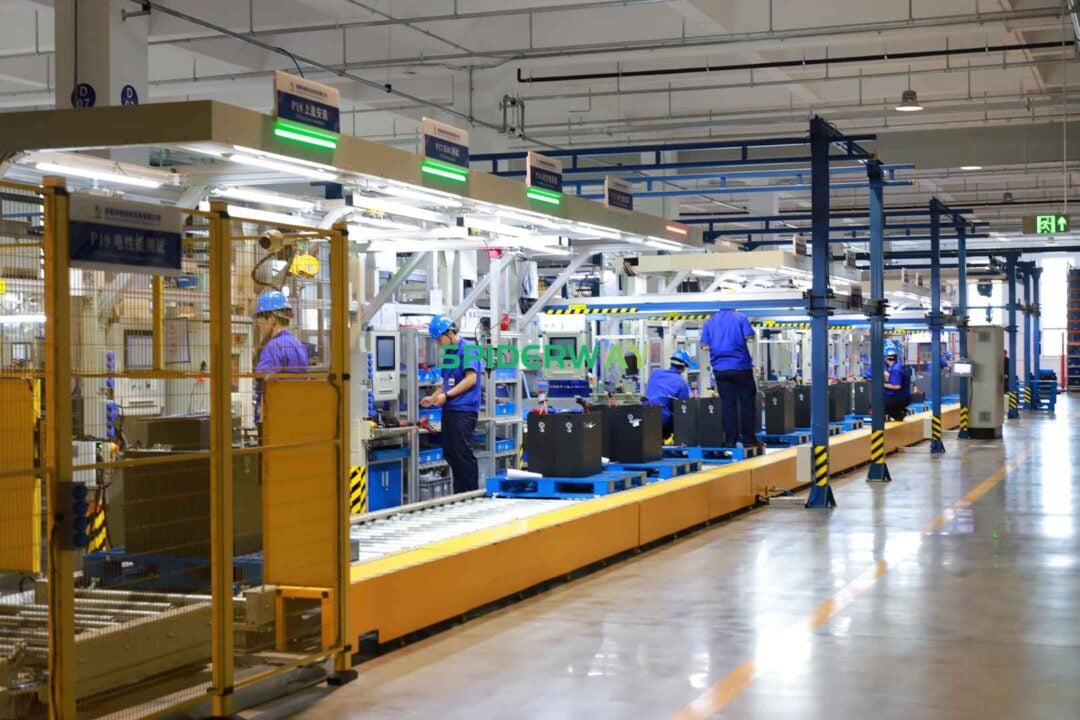
Flooded lead-acid batteries require regular electrolyte checks and watering, which adds labor and introduces human error. LiFePO₄ batteries eliminate routine watering. Sophisticated integrated BMS features—including cell monitoring, temperature sensing, over-current, over-voltage, under-voltage, and short-circuit protection, plus state-of-charge (SOC) tracking and communication interfaces—turn the battery into an intelligent component of the cleaning machine.
5. Stable Voltage Under Load
LiFePO₄’s relatively flat discharge voltage keeps traction motors, brush motors, vacuum fans, and pumps operating consistently. Unlike lead-acid, which experiences a progressive voltage drop, a well-designed LFP battery maintains stable power output across most of its usable discharge range. This is especially valuable for ride-on scrubbers and large commercial machines where cleaning performance is tied to motor speed.
6. Reduced Weight
LiFePO₄ batteries are significantly lighter than lead-acid equivalents, offering easier handling, simpler installation and removal, lower machine weight, improved energy efficiency, and more design flexibility. However, weight reduction isn’t always the goal—in some machines, the lead-acid battery acts as counterweight and affects traction. SPIDERWAY evaluates the complete machine design, ensuring the lithium pack is optimized for performance, not just minimum weight.
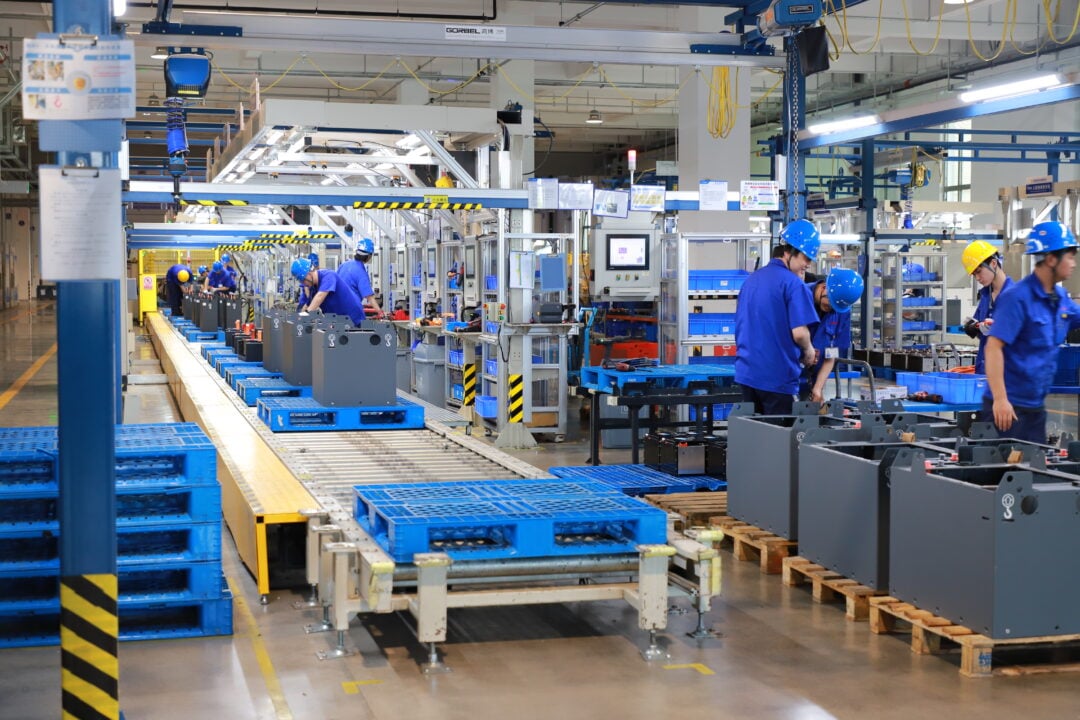
LiFePO₄ vs. Lead-Acid, AGM, and Gel: A Quick Comparison
| Battery Technology | Cycle Life* | Maintenance | Charging Opportunity | Usable Energy | Weight | Safety |
|---|---|---|---|---|---|---|
| Flooded Lead-Acid | Lower | High | Limited | Moderate | Very Heavy | Good with proper ventilation |
| AGM | Moderate | Low | Moderate | Moderate | Heavy | Good |
| Gel | Moderate | Low | Moderate | Moderate | Heavy | Good |
| LiFePO₄ | High | Very Low | Excellent | High | Much Lower | Excellent thermal stability |
*Actual cycle life varies with battery design, operating conditions, DoD, temperature, charging method, and cell quality.
Fleet operators often overlook that the lowest purchase price doesn’t always yield the lowest lifetime cost. LiFePO₄’s longer life and lower maintenance can deliver better economics over the service life.
Industry Adoption of Lithium-Ion
The trend is already visible in the professional cleaning market. For instance, IPC’s CT15 offers a lithium-ion upgrade that reports longer runtime and substantially longer battery life compared to its AGM configuration. Tennant also markets lithium-ion batteries for its cleaning equipment, emphasizing benefits such as opportunity charging, elimination of watering, and reduced maintenance. These examples underscore the growing acceptance of lithium technology in demanding commercial environments.
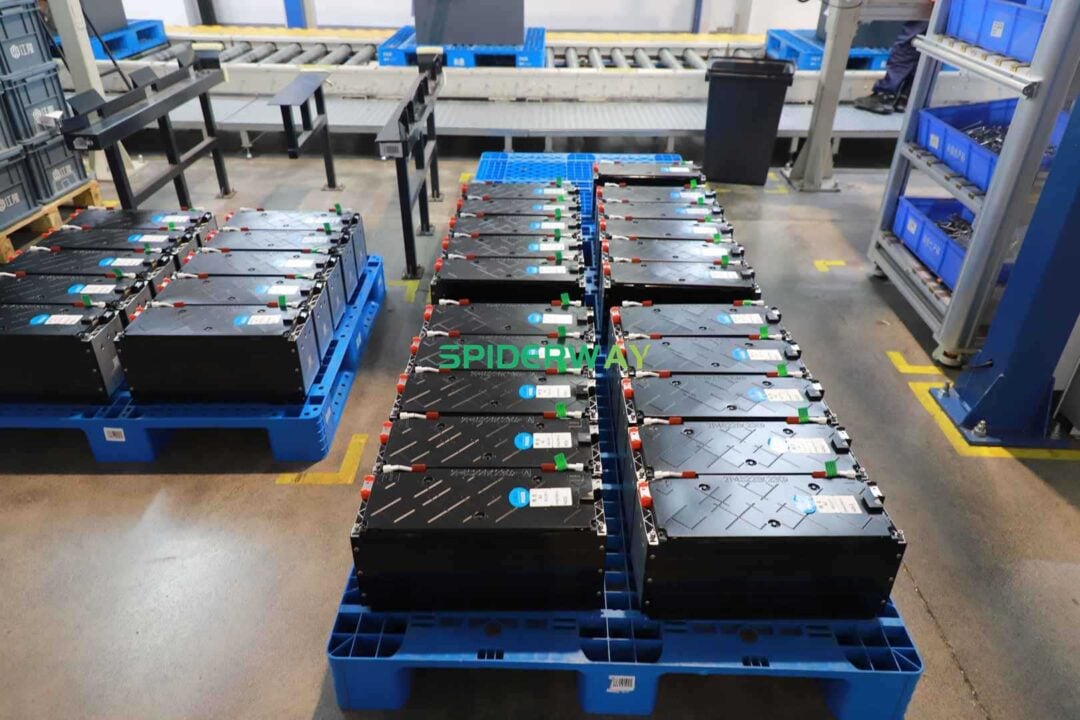
OEM and ODM Manufacturing: Engineering Batteries Around the Machine
At SPIDERWAY, we don’t treat a floor scrubber battery as a generic pack. Our approach is to design the battery around the machine—starting with an analysis of the original battery system and the full electrical and mechanical environment.
Key Engineering Parameters
Our engineers evaluate nominal voltage, capacity, peak and continuous discharge currents, motor power, battery compartment dimensions, connector configuration, mounting structure, charger specifications, BMS requirements, communication protocols (e.g., CAN, RS485), battery display needs, SOC calculation, operating temperature, IP protection requirements, charging strategy, and machine controller compatibility. The goal is to create a battery that is an integral part of the machine, not just a voltage-and-capacity match.
New Machine Integration
For manufacturers developing a new scrubber, SPIDERWAY can participate from the design stage, providing considerably more engineering flexibility than a retrofit. Customization options include:
- Battery architecture: 24V, 36V, 48V, or other customized voltage platforms; capacity configured to runtime, compartment size, motor load, and target charging time.
- Mechanical integration: dimensions, housing structure, mounting holes, handles, cable exits, connectors, terminal configuration, display position, service access, and waterproofing.
- Electrical integration: BMS integration, CAN/RS485 communication, SOC and alarm data, charging control, discharge protection, and temperature monitoring—essential for intelligent and autonomous cleaning machines.
Lithium Upgrade for Existing Scrubbers
Beyond new equipment, there is a massive installed base of scrubbers running on flooded lead-acid, AGM, or gel batteries. These machines can be upgraded to LiFePO₄ without replacing the entire unit—a cost-effective path for fleet modernization. A typical project follows this sequence: original lead-acid battery → SPIDERWAY LiFePO₄ battery → compatible charger → BMS integration → machine testing → fleet deployment. The exact configuration must be validated against the specific machine.
Compatibility with Major Scrubber Brands
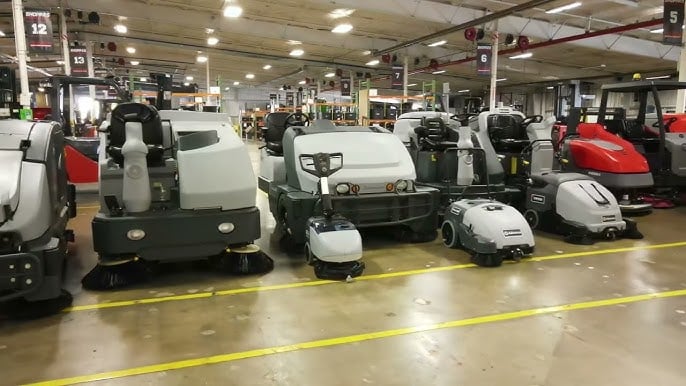
SPIDERWAY develops custom batteries for many commercial cleaning platforms, including machines from Tennant, Nilfisk, Kärcher, Hako, IPC / IPC Eagle, Fimap, Comac, TASKI / Diversey, Numatic, Advance, Viper, PowerBoss, ICE, NSS, Eureka, and other regional or private-label manufacturers. Our engineering is model-specific, not brand-name-only: two machines from the same manufacturer can differ in battery dimensions, connectors, charging systems, and BMS communication. Always confirm compatibility based on the specific machine model and original battery specifications.
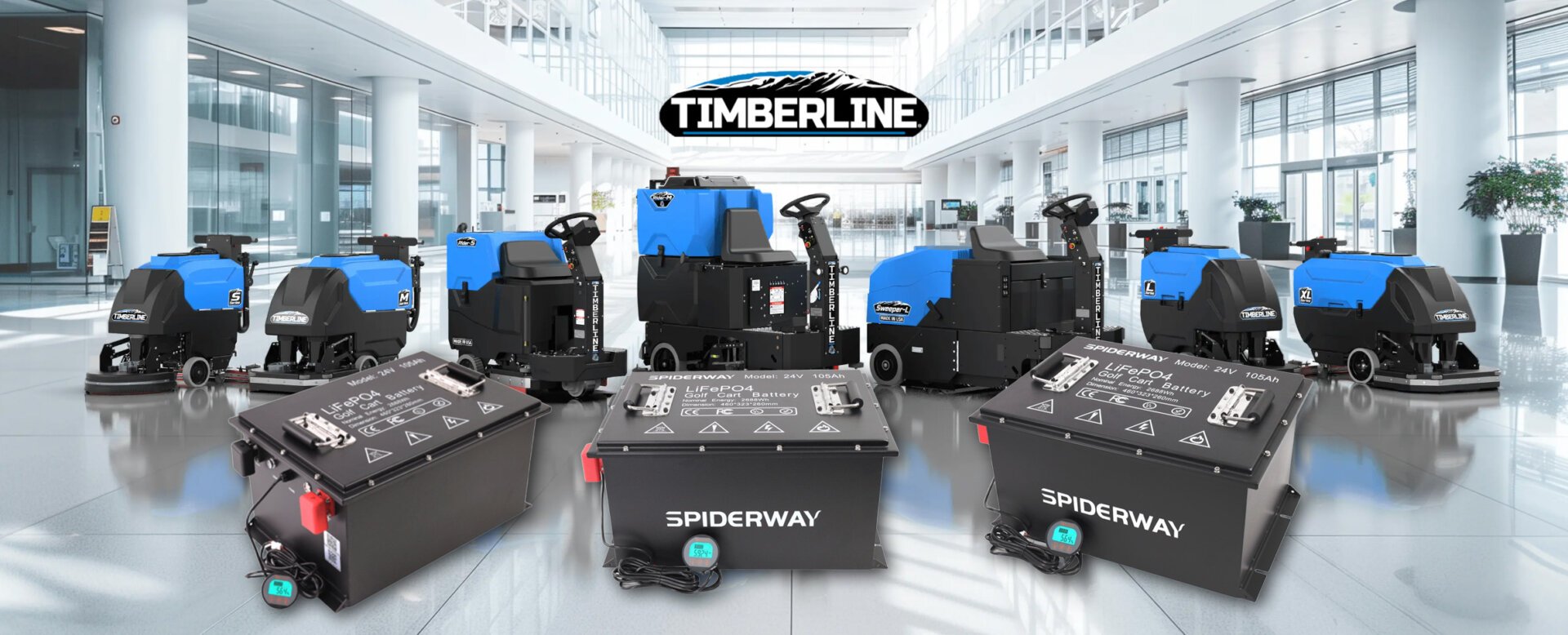
Battery Solutions Across the Scrubber Range
From compact walk-behind units to large ride-on and autonomous machines, SPIDERWAY can engineer LFP systems for every category.
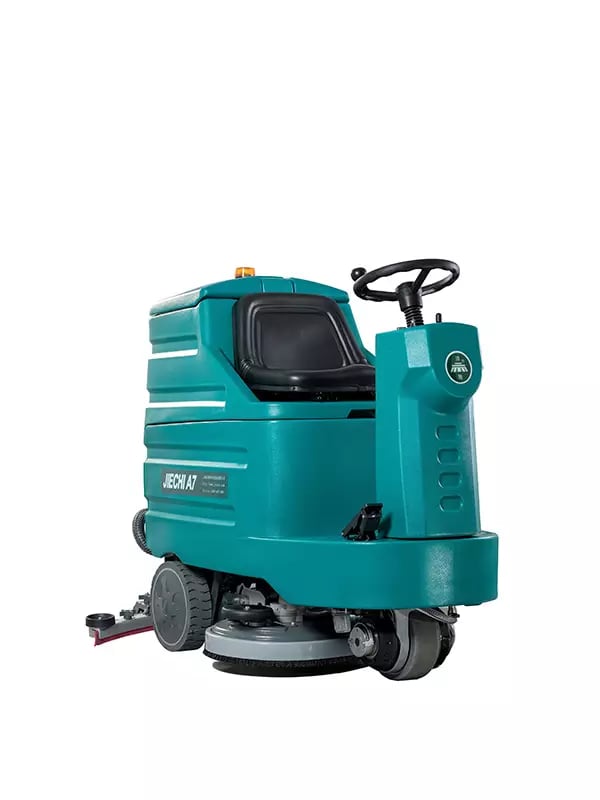
Walk-Behind Scrubbers
These machines serve retail stores, restaurants, schools, hospitals, hotels, small warehouses, and commercial buildings. They prioritize compact dimensions, manageable weight, and sufficient runtime.
Stand-On Scrubbers
Stand-on models need a balance of compact packaging, high power output, and adequate operating time. Battery design must account for both traction and cleaning-system loads.
Ride-On Scrubbers
Large ride-on machines demand higher energy capacity and continuous power for traction motors, brush motors, vacuum motors, water pumps, control electronics, and auxiliary systems. Thermal management, BMS configuration, cable sizing, and connector selection become critical as power increases.
Autonomous Floor Scrubbers
Autonomous cleaning robots add layers of complexity: the battery must support not only propulsion and cleaning but also navigation systems, sensors, controllers, communication modules, safety systems, and automated charging. Accurate SOC estimation and reliable BMS communication are especially vital.
SPIDERWAY’s Structured OEM/ODM Workflow
A successful project follows a disciplined engineering process:
- Specification Analysis: The customer provides machine model, original battery info, dimensions, electrical specs, and application requirements.
- Battery System Design: We select LFP cells, configuration, BMS, connectors, housing, protection, and charging solution.
- Prototype Development: A custom prototype is built for physical and electrical verification.
- Integration Testing: The battery is installed in the target scrubber and tested under realistic conditions—runtime, charging, peak and continuous current, motor performance, temperature, SOC accuracy, BMS protection, communication, mechanical fit, and connector compatibility.
- Optimization: Based on test results, we refine mechanical, electrical, thermal, and software parameters.
- Mass Production: After validation, we move to production according to your OEM/ODM specifications and quality requirements.
Why Choose SPIDERWAY?
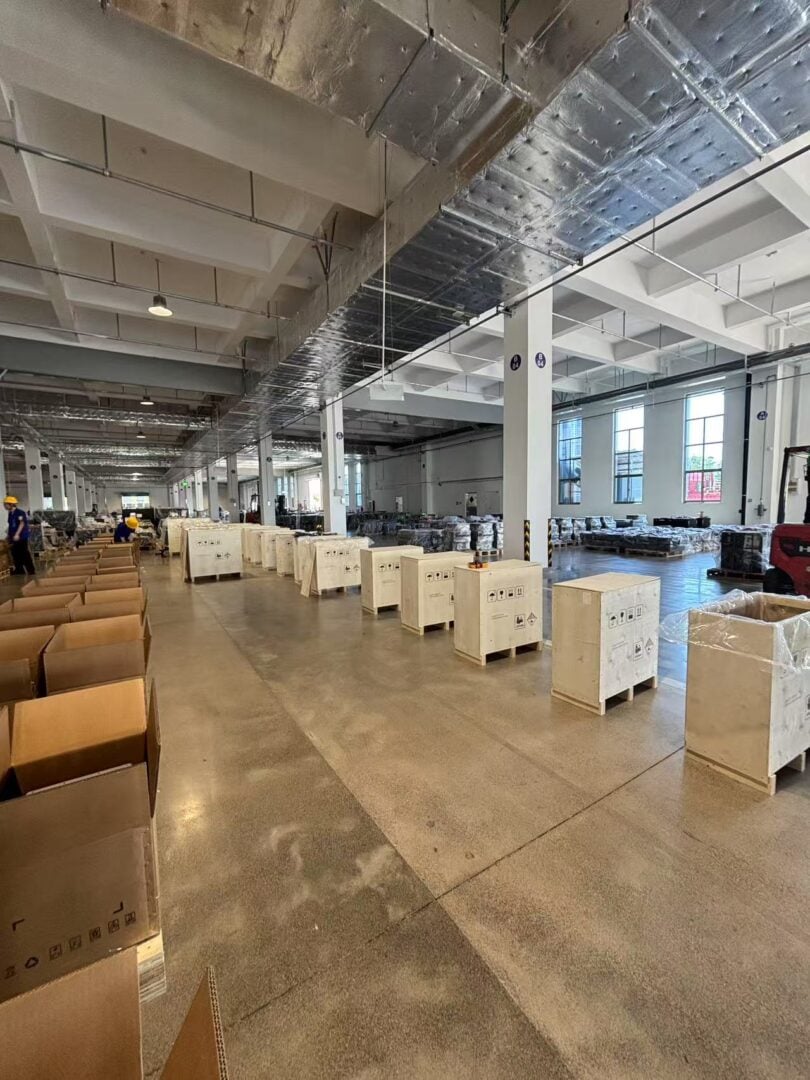
SPIDERWAY combines deep lithium battery engineering, industrial vehicle battery experience, and flexible OEM/ODM manufacturing. We serve both new-equipment manufacturers and aftermarket distributors. Our key strengths include:
- Customized engineering: voltage, capacity, dimensions, connectors, BMS, communication, and housing tailored to your machine.
- OEM/ODM flexibility: new designs, private-label batteries, custom housings, custom BMS, custom connectors, machine-specific packs, large-scale production, and aftermarket replacements.
- New machine integration: we can co-design the battery system for your upcoming equipment.
- Aftermarket conversion: practical lithium upgrades for legacy lead-acid machines.
The Right Battery for Your Application
Choosing a floor scrubber battery isn’t about comparing Ah ratings alone. The correct solution depends on the operating profile. A small retail store’s scrubber may need a completely different battery than a ride-on machine cleaning a 100,000-square-foot warehouse. Considerations include machine type, motor power, operating hours, required runtime, voltage, capacity, maximum current, charging time, battery compartment, BMS, charger, communication, and environment. That’s why professional OEM engineering is indispensable.
The Lithium-Powered Future of Commercial Cleaning
The cleaning industry is moving toward automation, lower operating costs, reduced maintenance, and higher equipment utilization. Lithium-ion technology is a key enabler. For floor scrubbers, LiFePO₄ offers an ideal combination of long cycle life, high usable energy, stable performance, low maintenance, fast charging, and thermal stability. As autonomous cleaning and multi-shift operations expand, the battery will evolve from a replaceable part into an integrated intelligent power platform.
Partner with SPIDERWAY for Your Floor Scrubber Battery OEM/ODM
SPIDERWAY provides customized LiFePO₄ battery OEM and ODM solutions for commercial floor scrubbers, industrial cleaning machines, ride-on and walk-behind scrubbers, sweepers, autonomous cleaning equipment, and other battery-powered cleaning equipment. Our solutions cover new machine integration, OEM production, ODM development, private-label programs, lead-acid-to-lithium upgrades, aftermarket replacement, fleet modernization, and multi-model battery platforms.
Send us your floor scrubber brand, model number, original battery specifications, battery compartment dimensions, and target operating time. Our engineering team will evaluate the appropriate LiFePO₄ battery architecture for your application.
Supplier & Author Profile

- SpiderwayVerified
SPIDERWAY is a trusted LiFePO4 battery manufacturer specializing in golf cart, marine, RV, solar energy storage, industrial, and custom lithium battery solutions. We deliver OEM/ODM services, factory-direct quality, global shipping, and expert support for distributors, brands, and wholesale buyers worldwide.
Latest entries
- 2026-09-17Liquid-Cooled LiFePO4 Battery Packs for Heavy-Duty Electric Machinery
- 2026-09-16598.92V 180.87kWh High-Voltage Lithium Battery System for Heavy-Duty Electric Machinery
- 2026-09-08Exploring SPIDERWAY’s LiFePO4 Battery Plant in Hefei: A Look Inside an Advanced Industrial Lithium Battery Production Line
- 2026-09-08Evolution of LiFePO4 Battery Energy Density: A Decade of Advances and Future Outlook (2015–2035)