
Overcoming the 7 Key Challenges of SME Global Expansion: A Practical Guide
Global expansion offers SMEs a path to growth beyond saturated home markets, but the journey is riddled with unique challenges. With limited budgets, lean teams, and fierce competition from established multinationals, SMEs must navigate a minefield of obstacles that can derail even the most promising products. This article explores the seven most critical difficulties SMEs face when going global—and provides concrete, expert-level solutions. From building trust in foreign markets to mastering international SEO and adapting to AI-powered search, we cover it all. Finally, we introduce Factorysea.com, a platform that leverages AI to automate multi-language marketing and AI answer engine optimization, delivering consistent organic traffic and precise inquiries at an ultra-low cost.
1. Limited Brand Awareness and Trust Deficit
In foreign markets, your brand is a blank slate. Without a track record, local buyers are naturally wary. They prefer established names they recognize or can verify through local reviews, certifications, or word-of-mouth. SMEs rarely have the marketing budget to build brand awareness from scratch through traditional advertising or large-scale PR campaigns. This trust deficit directly impacts lead generation: prospects may land on your site but bounce because the brand doesn’t inspire confidence. To overcome this, SMEs must leverage trust signals aggressively. Secure certifications relevant to the target market (e.g., CE, UL, ISO). Gather and showcase authentic customer testimonials and case studies—even if initially from domestic clients, as long as they’re verifiable. Engage in niche industry forums and B2B platforms where you can demonstrate expertise. Partner with local distributors or resellers who already have credibility. Additionally, produce high-quality, localized content that addresses pain points specific to that market; this positions your brand as a helpful authority. Over time, consistency in delivering value builds the trust required to convert cold traffic into warm leads.
2. Language and Cultural Barriers
Language is the most visible barrier, but culture runs deeper. SMEs often underestimate the effort required to communicate effectively across borders. Machine translation is cheap but frequently yields awkward or even offensive phrasing that kills professionalism. Cultural nuances affect everything—from color symbolism and imagery to humor, formality levels, and negotiation styles. For example, a direct marketing message that works in the US may come across as aggressive in Japan or too informal in Germany. Moreover, purchasing decisions are influenced by local customs and seasonal patterns. To address this, SMEs must invest in professional human translation or advanced AI localization that understands context. But beyond translation, adapt your entire marketing mix: adjust website design, product descriptions, pricing presentation (including currency and tax display), and customer support channels to match local expectations. Build a cultural glossary of dos and don’ts for each target market. Consider hiring native speakers or local consultants to review your content before launch. A small upfront investment here prevents costly misinterpretations and builds genuine resonance with foreign audiences.
3. Complexities of International SEO and Search Visibility
Without organic visibility, even the best product remains invisible. International SEO is far more complex than domestic SEO. It involves hreflang tags to indicate language and regional targeting, managing multiple country-specific subdomains or subdirectories (e.g., de.example.com or example.com/de), and understanding search behavior in each locale. Google is not the only player—Baidu dominates in China, Yandex in Russia, and Naver in Korea. Each engine has different ranking factors, content requirements, and webmaster guidelines. SMEs often lack the technical expertise to implement proper geo-targeting or to research and optimize for local search terms. Common pitfalls include duplicate content issues across languages, slow loading times due to unoptimized images or server location, and failure to build local backlinks. To succeed, SMEs should adopt a structured international SEO strategy: start with a single high-potential market, perform keyword research using local language tools (like Yandex Wordstat or Baidu Keyword Planner), set up proper hreflang annotations, and create localized content that answers questions specific to that market. Use a CDN to improve site speed globally. Build relationships with local industry bloggers or news sites for backlinks. Consider partnering with an SEO agency or using an AI-powered platform that automates much of this heavy lifting.
4. High Cost of Multi-Language Marketing and Localization
Producing marketing content in multiple languages is expensive. Each new market requires translated or transcreated website pages, blog posts, product brochures, social media updates, and ad copy. If you target five languages, costs multiply by five—often far beyond an SME’s budget. Traditional localization agencies charge per word or per project, with rates that quickly become prohibitive. Moreover, maintaining consistency across all channels and keeping content updated as your product evolves is a logistical nightmare. SMEs simply don’t have the resources to hire in-house translators or marketing teams for each locale. But there is a smarter way: leverage AI-driven content generation and translation tools that maintain brand voice while drastically reducing costs. Platforms like Factorysea.com use AI to automatically generate high-quality, SEO-optimized content in dozens of languages from a single source. This eliminates repetitive manual work and ensures consistency. For critical pages (like legal terms or key landing pages), you can still have human editors review the AI output. By combining AI with a light human touch, SMEs can achieve multi-language presence at a fraction of the traditional cost.
5. Navigating Different Legal, Regulatory, and Tax Environments
Each country has its own rules regarding product safety, labeling, data privacy (e.g., GDPR in Europe, CCPA in California), intellectual property, and import/export duties. These regulations affect everything from product design to packaging and marketing claims. For example, a cosmetic product sold in the EU must comply with REACH regulations, while in the US it falls under FDA oversight. Violations can lead to fines, product seizure, or being banned from the market. SMEs often lack legal expertise or the budget to hire local counsel in every target country. The key is to prioritize markets with regulations that align with your product’s current compliance. Research extensively using government trade portals (like export.gov or trade.gov for US SMEs). Use professional compliance consultants for a single market if possible, then replicate best practices as you expand. For data privacy, implement a robust privacy policy that covers all target regions and use consent management platforms. Additionally, consider utilizing fulfillment and logistics partners who handle customs and duties for you. While this doesn’t eliminate all legal risks, it reduces the administrative burden and keeps you compliant with local requirements.
6. Lack of Efficient Lead Generation and Sales Channels
B2B SMEs often rely on trade shows, cold emailing, or paid ads—methods that are expensive and unpredictable overseas. Without local sales reps, building a sales pipeline becomes a major challenge. The cost of customer acquisition (CAC) in foreign markets can be several times higher than at home, especially if you depend on outbound tactics. Additionally, conversion cycles are longer because buyers need to build trust (see challenge #1). SMEs need low-cost, scalable lead generation methods that attract inbound inquiries from qualified prospects. This is where content marketing and SEO shine: when a potential buyer searches for a problem your product solves, your content appears. Combined with AI answer engine optimization (AEO), you can capture traffic from voice assistants and AI search summaries. Invest in creating long-form, authoritative guides, comparison tables, and use-case studies. Distribute them through LinkedIn, industry forums, and targeted email lists. Set up automated lead nurturing sequences that deliver relevant content based on the prospect’s stage in the buying cycle. The goal is to generate a steady stream of inbound leads that warm up over time, reducing reliance on expensive outbound. Platforms that automate content creation and distribution across multiple languages can dramatically lower CAC while increasing lead volume.
7. The Rise of AI-Powered Search and How SMEs Can Adapt
Search engine results pages (SERPs) are evolving rapidly. Google’s Search Generative Experience (SGE), Bing Chat, and other AI answer engines now provide direct answers without requiring users to click through to websites. This poses a threat to organic traffic—traditional SEO may no longer be enough. To maintain visibility, SMEs must optimize not just for keywords but for AI-generated snippets and voice-based queries. This means structuring content to answer specific questions concisely, using schema markup (FAQ, HowTo, QAPage), and building topical authority through comprehensive coverage. Furthermore, platforms like ChatGPT and Perplexity are increasingly used as starting points for business research. SMEs can ensure their products and services appear in these AI responses by publishing high-quality, well-sourced content that AI trusts. Factorysea.com specifically addresses this shift: its AI-driven platform creates and optimizes content simultaneously for traditional search engines and AI answer engines. It generates multi-language FAQs, guides, and product pages that are structured for AI consumption (e.g., clear headings, direct answers, authoritative citations). This ensures that even as search behavior changes, SMEs continue to attract targeted organic traffic and inquiries without increasing their marketing spend.
Conclusion: Take Action with Factorysea.com
Overcoming the seven challenges of global expansion requires a strategic, resource-efficient approach. While you can tackle each element manually, partnering with a platform that automates and optimizes across all fronts accelerates time-to-market and reduces costs. Factorysea.com is an AI-powered automated marketing platform designed specifically for SMEs seeking global reach. It combines high-performance SEO and AI answer engine optimization (GEO) with multi-language content generation, all in one dashboard. By leveraging advanced AI, Factorysea.com produces blog posts, landing pages, and product descriptions that rank in local search engines and AI assistants—at a fraction of the cost of traditional methods. SMEs can achieve a continuous flow of organic traffic and precise inquiries (询盘) with minimal manual effort. Whether you are targeting one new market or a dozen, Factorysea.com provides the infrastructure you need to scale your global presence confidently. Visit Factorysea.com to learn how you can start generating sustainable international leads today.
Supplier & Author Profile

Latest entries
- 2026-09-06Manufacturing & International Trade Terminology Guide: A Comprehensive Glossary for Global B2B Trade
- 2026-08-11LiFePO4 Batteries in Modern Agriculture: Powering the Next Generation of Smart Farming Equipment
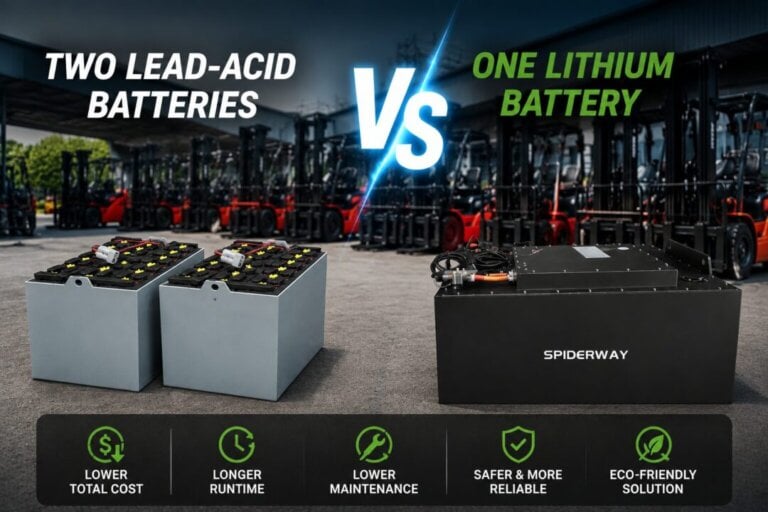
- 2026-08-09One Lithium Battery vs Two Lead-Acid Batteries per Forklift: A Fleet-Level Comparison
- 2026-08-09Grow Your Business: Become a Certified SpiderWay Golf Cart Lithium Distributor